Market insights
Buying property in Antalya as a foreigner: the real cost and the residence-permit trap (2026)
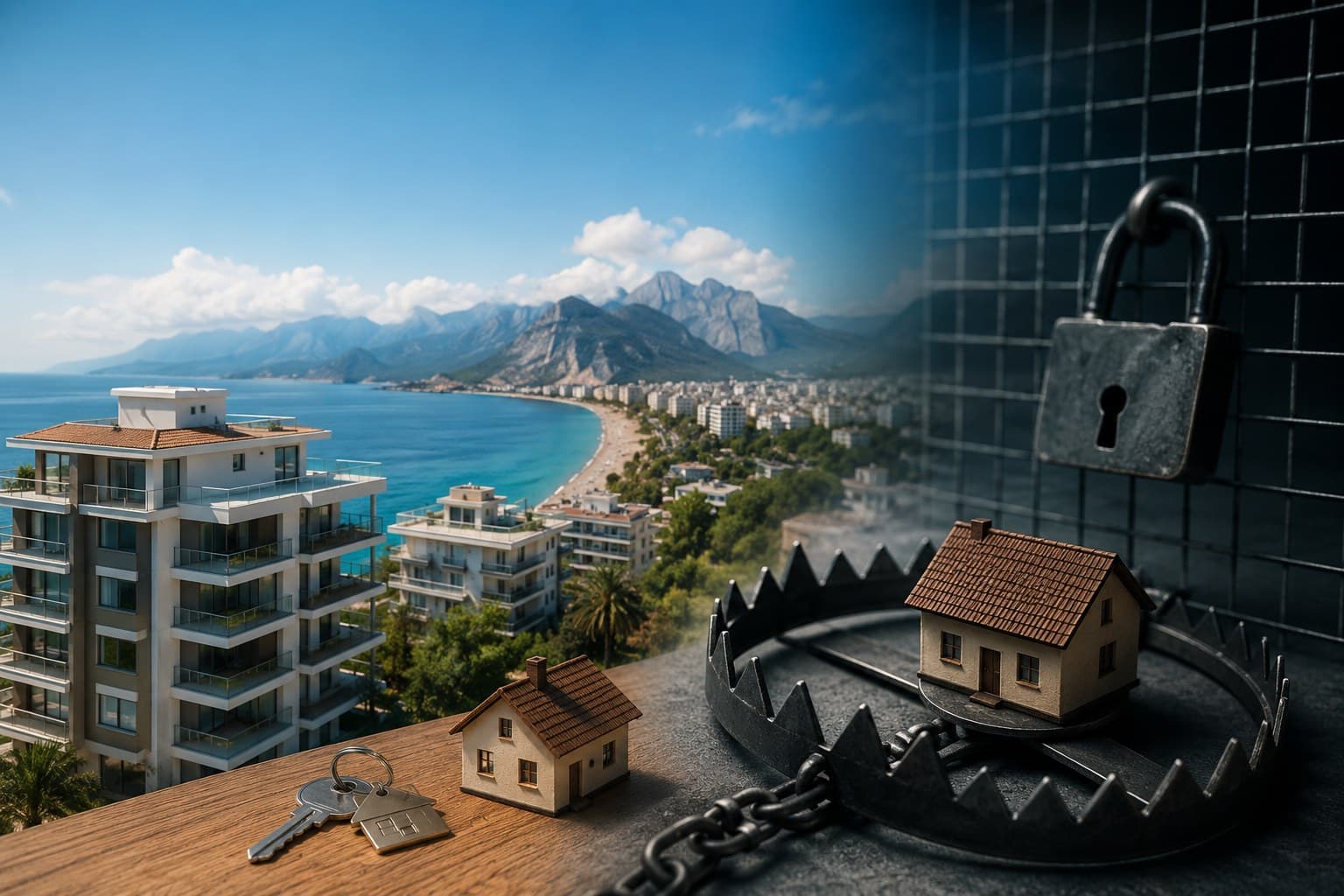
The price on the listing is the part everyone looks at. It is rarely the number you actually pay. Two things blindside foreign buyers in Antalya: the stack of taxes and fees that sits on top of the purchase price, and a set of residence-permit rules that decide whether you can actually live in the home you just bought. We built our reputation on transparent pricing, so here is the honest picture, current to mid-2026.
A note before the numbers: Turkish tax and immigration rules change often, and several figures below were revised at the start of 2026. Treat this as orientation, not legal advice — confirm the current position with the relevant authority (the Land Registry, the Revenue Administration, the Directorate of Migration) or with us before you commit.
Can a foreigner even buy?
Yes. Citizens of more than 180 countries can buy property in Turkey in their own name, with full freehold ownership — the same title (Tapu) a Turkish citizen holds. The limits are practical, not personal: you cannot buy inside a designated military or security zone, and a single foreign national is capped at thirty hectares of land nationwide. Neither limit touches an ordinary apartment or villa buyer.
One distinction to hold onto from the start: owning a property and having the right to live in Turkey are two separate things. You can own a home in any neighbourhood. Whether you can register an İkamet İzni at that address is a different question — and the answer has changed. We come back to it below, because it is where most foreign buyers in Antalya get caught out.
The real cost on top of the price (roughly 4–7%)
Budget four to seven percent of the purchase price for the costs that land on top of it. The pieces:
Title-deed transfer tax (tapu harcı). The big one: 4% of the declared property value, paid at the Land Registry on the day of transfer. By law it splits 2% buyer, 2% seller — but in practice, in most deals with foreign buyers, the buyer is asked to carry the full 4%. Settle who pays before you sign, not at the registry desk.
A 2026 change worth knowing. From January 2026, the municipal assessed minimum values (rayiç bedel) — the floor the 4% is calculated on — rose sharply across much of the country, including Antalya, in some areas by several times. The declared value can no longer be set below that floor. So even where the actual price has not moved, the transfer tax on many properties is higher this year. And under-declaring to save tax is now genuinely dangerous: the penalty has been raised to as much as 100% of the missing tax, and the authorities cross-check declared values against bank transfers. Declare the real price.
Valuation report. Foreign buyers need an appraisal from an SPK-licensed firm. Budget roughly 150–300 €. The same report is what a residence or citizenship application later relies on.
DASK earthquake insurance. Mandatory. You cannot transfer the deed or connect utilities without it. For a typical apartment it runs about 50–160 € a year.
The smaller line items. A fixed land-registry processing fee (döner sermaye), higher for foreigners; a sworn translator who must attend the registry appointment; notary fees, and a power of attorney if you cannot attend in person. Together, a few hundred euros.
Agent commission. Customary in Turkey is 2% plus VAT, paid by the buyer.
VAT (KDV). A resale bought from a private individual carries no VAT. A new-build bought from a developer can, anywhere from roughly 1% to 20% depending on the project. Foreign buyers paying in foreign currency from abroad can qualify for a VAT exemption on a qualifying first sale, provided they hold the property for the required period — a real saving worth asking the developer to confirm in writing.
The residence-permit trap — the part most people miss
Here is the rule that surprises people. Buying a home does not, on its own, give you the right to live in Turkey. The 90-day visa-free stay is separate. To live here longer you need a residence permit (İkamet), and the rules tightened.
The value threshold. To get a residence permit on the strength of the property itself, the home must be worth at least USD 200,000, confirmed by the SPK appraisal and recorded on the deed. Below that figure, the property route is simply closed; you would have to qualify another way — income, family ties, study.
The district rule — and why it matters in Antalya. Turkey has closed roughly 1,169 neighbourhoods (mahalle) nationwide to new residence-permit registrations. The trigger is demographic: once registered foreigners pass a fifth to a quarter of a neighbourhood's population, it closes. Crucially, you can still buy anywhere — ownership rights apply in every district. It is only the residence-permit registration that is blocked.
In Antalya this is not abstract. As of mid-2026, in Konyaaltı the neighbourhoods of Liman, Hurma and Sarısu are closed to new permits, while Akdeniz, Gürsu and Mollayusuf remain open; Kepez and Aksu are largely unproblematic. So a foreigner who buys in Liman purely to obtain residence may end up owning a perfectly good apartment and still be unable to register the permit at that address.
Two practical consequences. First, if a residence permit is part of your plan, the neighbourhood matters as much as the property. Second, these lists move month to month — a mahalle open when you start looking can close before you apply, and the check is done on the application date, not the purchase date. Confirm the current status of the exact neighbourhood before you sign. This is precisely the kind of check a local agent does as routine.
The rest of the permit picture. You will also need to show documented monthly income of roughly one-and-a-half times the net minimum wage, applications are filed through the digital e-İkamet portal, and processing in Antalya typically takes thirty to ninety days.
How the purchase actually runs, step by step
- Get the basics. A Turkish tax number and a local bank account — both quick, both done on your passport.
- Do the due diligence. Confirm the seller holds a clean title with no mortgage, lien or restriction; check the building has its occupancy permit (iskan); make sure the physical property matches the registered plans. Coastal stock often has unapproved extensions — this is where the real risk hides, far more than in the tax line.
- Commission the valuation. The SPK appraisal sets the official value used for tax and for any later permit or citizenship application.
- Move the money properly. Send the funds through the banking system and obtain the foreign-exchange purchase certificate. Documented payment matters — for residence, for citizenship, and for a clean resale later.
- Sign at the Land Registry. You, or a representative under a tightly-scoped power of attorney, complete the transfer. The deed is issued the same day, and you become the legal owner.
- Settle in. Move the utilities into your name, set up DASK. From agreed offer to deed, a clean purchase usually takes six to eight weeks.
What it costs to own it afterwards
The purchase is one-off; ownership has a running cost, though a modest one.
Annual property tax (emlak vergisi). For a home in a metropolitan city like Antalya, around 0.2% of the municipal assessed value, paid in two instalments in May and November. Because the assessed value sits below the market price, the real figure is low.
Building fees (aidat). In a complex with a pool, security and shared grounds, expect roughly 30–150 € a month.
DASK renews yearly.
If you let it. Rental income above the annual exemption is taxed at progressive rates, and you file a declaration for the prior year.
If you sell. Sell within five years of the deed date and the profit is taxed on a progressive scale; hold beyond five years and the gain is exempt.
The mistakes that cost foreign buyers money
- Under-declaring the price to shave the 4%. With the 2026 penalty at up to 100% of the missing tax and bank transfers cross-checked, the saving is not worth the exposure.
- Buying in a closed neighbourhood expecting a residence permit to follow. Check the mahalle first.
- Paying a large deposit before the title and the iskan are verified. Money should move after the checks, not before.
- Reading a "net to seller" price as the final number. Commission and costs sit on top — clarify the all-in figure early.
The bottom line
The price tag is the easy part. The costs that sit on top of it, and the district rules that decide whether you can live where you bought, are where foreign buyers lose money and time — and where a local advisor earns their keep. We work street by street in Konyaaltı and across Antalya, and we check the neighbourhood's permit status before you commit, not after. If you are weighing a purchase, talk to us first.
Figures and rules in this article are current to mid-2026 and are intended as general orientation, not legal or tax advice. Turkish property, tax and immigration rules change frequently — confirm the current position with the Land Registry (TKGM), the Revenue Administration (GİB) and the Directorate of Migration (Göç İdaresi), or ask us, before you act.