Market insights
Property in Hurma: a complete guide to one of Konyaaltı's most popular neighbourhoods in 2026
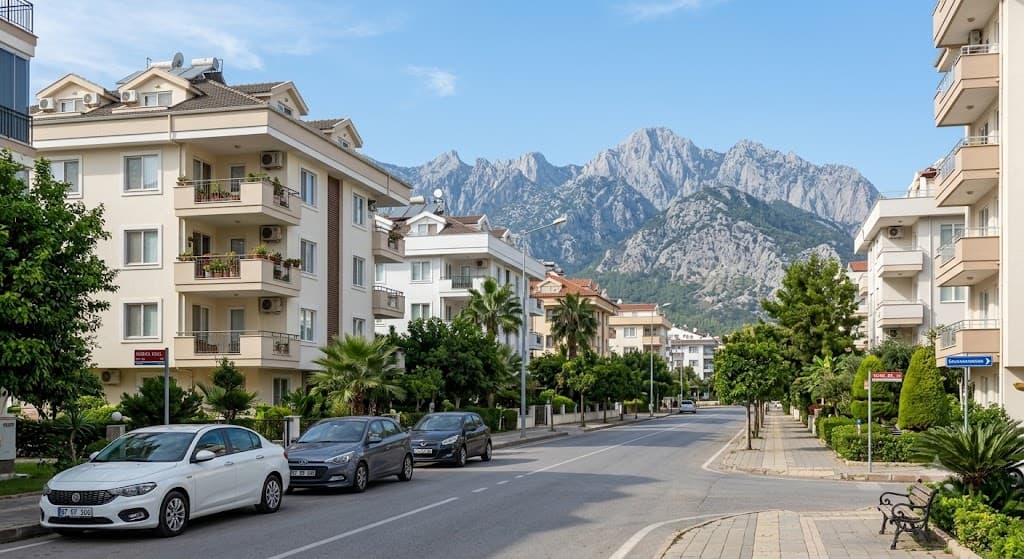
When property shopping in Konyaaltı, Hurma often ends up on the shortlist for foreign buyers, families with children, and people planning to move to Antalya permanently.
The reason for its popularity is easy to see. Hurma combines relatively convenient access to the coast, developed everyday infrastructure, a large number of modern complexes, and a wider choice of property than neighbourhoods sitting right next to the beach.
At the same time, Hurma is noticeably different from Liman and Gürsu. There's less tourist traffic here, and almost no large hotels or a busy seafront promenade. The neighbourhood is made up mostly of residential buildings, gated residences, supermarkets, schools, playgrounds and small local businesses.
Over the past few years the neighbourhood has changed considerably. Vacant land has given way to modern complexes with pools, parking, security and landscaped grounds. At the same time, Hurma has kept some streets with older housing stock and relatively affordable apartments.
In this guide, Variant Gayrimenkul's specialists have put together the essential information to help you judge Hurma objectively: who it suits, what kinds of apartments are available, what property might cost, what costs await an owner after buying, and what to watch for before closing a deal.
Where Hurma is
Hurma sits in the western part of Antalya's Konyaaltı district.
The neighbourhood is positioned between Liman, Sarısu, Uncalı and the western part of Konyaaltı. On one side is the Mediterranean coast and Konyaaltı Beach; on the other, mountains and neighbourhoods closer to the city's northern side.
This location lets Hurma residents reach both the sea and the main roads of western Antalya relatively quickly.
One important transport reference point is the Western Ring Road — Batı Çevre Yolu. It connects Hurma to other parts of the city and provides an exit toward Kemer, Sarısu and central Antalya.
That said, the comfort of any specific spot within Hurma can vary considerably. Some buildings sit closer to Liman and the sea, others closer to the ring road or deeper into the neighbourhood. So when choosing an apartment, it matters to look not just at the neighbourhood's name but at the specific street, traffic load, distance to bus stops, and nearby infrastructure.
Key reference points:
- 🌊 Konyaaltı Beach — 1.8–2.5 km (about 5–7 minutes by car / 20–25 minutes on foot)
- ✈️ Antalya Airport — about 26 km (25–35 minutes by car)
- 🏛 Kaleiçi (old town) — about 15 km (20–25 minutes by car)
- 🛍 5M Migros shopping centre — about 8.5 km (10–12 minutes by car)
- 🎓 Akdeniz University — about 9.5 km (12–15 minutes by car)
- 🌳 Tünektepe cable car and recreation area — about 5 km (7–10 minutes by car)
- 🚗 Batı Çevre Yolu access — about 2 km (3–5 minutes by car)
It's worth keeping in mind that Hurma covers a fairly large area. Distance to the beach and key landmarks can differ noticeably even among apartments formally listed in the same neighbourhood.
Why buyers choose Hurma
The main reason for Hurma's popularity is the balance it strikes between property price, housing quality, and everyday convenience.
A buyer doesn't have to pay a premium purely for proximity to the first coastal row. At the same time, they get to live in a modern complex, use a pool, parking and landscaped grounds, while staying within Konyaaltı.
Main reasons buyers choose the neighbourhood:
- a wide choice of apartments in different formats;
- modern residential complexes;
- developed infrastructure;
- relatively convenient access to the sea;
- proximity to the ring road;
- a calm residential atmosphere;
- popularity among foreign buyers;
- the ability to find a property to fit different budgets;
- steady demand for long-term rental;
- both smaller apartments and spacious family units.
Another feature of Hurma is the variety of its housing stock. One block might have older buildings with a low Aidat, while the next has a new gated residence with a pool, gym, sauna, security and underground parking. That's exactly why the neighbourhood's average price doesn't always reflect what a specific property is actually worth.
Building type in Hurma
Hurma's active development happened mostly over the last 10–15 years. As a result, a large share of its housing stock is made up of relatively modern buildings and complexes.
Common types include:
- compact 1+1 apartments;
- 2+1 apartments;
- family-sized 3+1 apartments;
- 4+1 apartments;
- garden-level duplexes;
- two-level apartments on the top floors;
- apartments in gated complexes;
- standalone low-rise buildings.
1+1 and 2+1 apartments remain the most in demand. Compact units are often chosen by investors, young couples and buyers who plan to visit Antalya periodically. 2+1 and 3+1 apartments are more often bought for permanent family living.
Complex amenities
Depending on the complex's class and age, it may include: an outdoor pool, an indoor pool, a playground, a gym, a sauna, a hammam, a generator, CCTV, a concierge, security, open-air parking, covered or underground parking, landscaped grounds, and gazebos or lounge areas.
It's worth keeping in mind that more amenities mean a higher monthly Aidat.
A buyer needs to decide in advance whether they'll actually use the pool, gym, sauna and other complex facilities. In some cases, an apartment in a simpler building turns out to be more economically sensible — especially if the property is being bought for long-term rental.
Natural gas and heating
Many buildings in Hurma have natural gas infrastructure. However, a gas line running past the building doesn't always mean gas is connected to the specific apartment and used for heating.
Before buying, it's worth confirming: whether gas has been brought into the building, whether the apartment's connection has been arranged, whether a gas boiler is installed, whether gas is used for heating or only for cooking, whether there are any outstanding Abonelik debts, and whether individual meters are in place.
In buildings without natural gas, air conditioners or electric systems are often used for heating. For year-round living in winter, having proper heating can significantly affect an owner's comfort and costs.
Neighbourhood infrastructure
Hurma is a well-established residential neighbourhood with nearly everything needed for everyday life.
Within the neighbourhood and close by, you'll find: chain supermarkets, small grocery shops, pharmacies, cafés, bakeries, restaurants, gyms, beauty salons, veterinary clinics, bank branches and ATMs, schools, kindergartens, family medical centres, public transport stops, parks and playgrounds.
Unlike some of Antalya's newer neighbourhoods, Hurma is no longer seen as an area where housing construction significantly outpaces infrastructure development.
That said, the density of shops, cafés and transport varies depending on the specific part of the neighbourhood. So walking distance should be assessed from the specific complex, not the neighbourhood in general.
Shops and everyday services
Hurma is home to popular Turkish supermarket chains, including Migros, CarrefourSA, Şok, A101 and BİM.
Beyond the chains, the neighbourhood has a large number of small grocery shops, bakeries, butchers and places selling ready meals.
For larger shopping trips, residents can also use retail options in Liman, Sarısu and central Konyaaltı. As a result, most residents don't need to regularly travel into central Antalya for basic everyday needs.
Education
Hurma suits families with children thanks to state schools, private educational institutions, kindergartens and enrichment centres.
Before buying an apartment, a family is advised to check in advance: which state school a specific address is assigned to, whether places are available, how long the commute to school takes, whether school transport is offered, what language instruction is in, and whether private kindergartens and extracurricular courses are nearby.
For foreign families in particular, it's worth keeping in mind that a school being close on a map doesn't automatically mean a child can be enrolled there.
Healthcare
Family medical centres, dental clinics, private practices and pharmacies operate in the neighbourhood itself and in adjacent areas.
Larger state and private hospitals are located in other parts of Konyaaltı and Antalya, though thanks to good transport access, the drive usually doesn't take too long.
For families with young children, elderly buyers, and buyers with chronic conditions, it's worth separately assessing the distance to a specific clinic or hospital.
Parks and walking areas
Hurma has small neighbourhood parks, playgrounds and green spaces.
For longer walks, residents can use the Konyaaltı promenade, the Sarısu recreation areas, and natural areas in the western part of the city.
However, Hurma isn't a neighbourhood with its own full seafront promenade. To walk directly along the sea, you need to reach the Konyaaltı or Sarısu coastline.
Transport access
Bus routes running through Hurma and neighbouring areas connect western Konyaaltı to the city centre, the university, and other parts of Antalya.
For car owners, a key advantage is proximity to Batı Çevre Yolu. It simplifies getting to central Antalya, toward Kemer, to Sarısu, to the university, to the northern parts of the city, and onto the main intercity routes.
At the same time, proximity to major roads can also be a downside. Apartments right next to busy streets may see more noise and dust. Because of this, it's worth visiting a property not just during the day but also in the morning or evening, when traffic is heavier.
In 2026, construction and modernisation of stormwater infrastructure continues in Hurma, Sarısu and Uluç. This work is necessary for developing neighbourhoods, but during the project some streets may see temporary restrictions and construction-related inconvenience.
Can you live in Hurma without a car
Yes, but it depends heavily on the specific address. In the central and most established parts of Hurma, shops, pharmacies, cafés and bus stops are often within walking distance.
That said, a car makes life significantly easier if you need to regularly go to the beach, drop a child at a private school, get to the university, visit large shopping centres, work in central Antalya, or live in a more remote part of the neighbourhood.
So it would be inaccurate to say all of Hurma is equally convenient without a car. The specific location of the building needs to be analysed.
Property prices in Hurma in 2026
Hurma's market isn't uniform. An apartment's price depends not just on the number of rooms and size, but on the building's age, the complex's quality, renovation condition, legal status, and location within the neighbourhood.
Two 2+1 apartments of the same size can differ noticeably in price if one is in a new complex with a pool and parking, and the other is in an older building with no amenities.
Main factors affecting price: year built, exact location, distance to the sea, distance to Batı Çevre Yolu, floor, view, construction quality, apartment size, layout, renovation condition, whether furniture and appliances are included, whether natural gas is connected, open or covered pool, parking, Aidat amount, whether İskan is in place, Kat Mülkiyeti status, any encumbrances, and the specific complex's liquidity.
Market benchmarks below are based on Variant Gayrimenkul's own deal data, not averaged figures from listing portals:
| Property type | Price range (₺) | Price range (€) |
|---|---|---|
| 1+1 | 4,500,000–6,200,000 ₺ | €81,500–112,500 |
| 2+1 | 6,000,000–9,500,000 ₺ | €109,000–172,500 |
| 3+1 | 7,200,000–11,500,000 ₺ | €130,800–209,000 |
| Garden duplexes | 7,500,000–12,000,000 ₺ | €136,000–218,000 |
| Upper-floor duplexes | 9,500,000–15,000,000 ₺ | €172,500–272,500 |
| Average price per m² | ~74,500 ₺/m² | ~€1,350/m² |
Listing-portal data should only be used as a supplementary reference. The price an owner quotes in a listing doesn't always match the final deal price. Averages can also be skewed by expensive new projects, duplexes, large apartments, and properties that have sat unsold for a long time.
Advice from Variant Gayrimenkul's specialists: don't compare apartments on price per m² alone. A low price per m² can be explained by a poor layout, a ground or top floor, missing İskan, a high Aidat, the need for renovation, road noise, legal restrictions, an inflated total area in the listing, low construction quality, or parking difficulties. Before buying, compare the property's full set of characteristics, not a single figure.
Renting property in Hurma
Hurma sees steady demand for long-term rental.
The bulk of potential tenants are: local families, foreigners living in Antalya, young couples, company employees, professionals working in Konyaaltı, students and faculty, and people relocating to the city long-term.
The most liquid units are usually 1+1 and 2+1 apartments with a decent renovation, working appliances, air conditioning, and a convenient location.
Long-term rental benchmarks:
| Apartment type | Approximate rent (per month) |
|---|---|
| 1+1 | 25,000–35,000 ₺ (€455–635) |
| 2+1 | 35,000–48,000 ₺ (€635–870) |
| 3+1 | 40,000–55,000 ₺ (€725–1,000) |
| Duplex | 45,000–65,000 ₺ (€820–1,180) |
Rent is affected by: whether the unit is furnished, renovation quality, the building's age, complex amenities, floor, heating, distance to transport, availability of parking, the Aidat amount, whether pets are allowed, and the owner's terms.
When calculating returns, it's important to factor in not just the expected rent but potential vacancy, renovation, taxes, commission, Aidat, and the cost of replacing furniture or appliances.
Short-term rental
Hurma can be appealing for seasonal stays given its proximity to Konyaaltı and its popularity among foreigners.
However, an owner can't automatically rent out any apartment on a daily basis. Short-term tourist rental in Turkey is governed by separate rules. Before buying a property for this model, it's necessary to check: whether a permit can be obtained, building owners' consent or decisions if required, the specific complex's rules, whether the unit meets current requirements, tax obligations, any management company restrictions, and the legislation in force at the time renting begins.
Buying an apartment counting purely on daily rental income, without a prior legal check, is risky.
Investment appeal of Hurma
Hurma can be considered a neighbourhood for long-term investment, but not every property here is automatically a good deal.
Main advantages of the neighbourhood: steady demand for long-term rental, a large pool of potential tenants, popularity among foreign buyers, developed infrastructure, limited vacant land in the most sought-after streets, proximity to the sea and the ring road, and a wide range of properties.
That said, the neighbourhood's popularity is already reflected in the price of many apartments. So an investment strategy shouldn't rest on the general claim that "Hurma will keep rising" — it should be based on finding a property with a specific advantage: a price below comparable listings, a quality complex, an in-demand layout, a low or reasonable Aidat, a good location, a liquid floor, no legal issues, the ability to rent quickly, a promising view or surroundings, or a quality renovation.
Which properties tend to suit investors
The clearest options for long-term rental are usually: 1+1 apartments in the developed part of the neighbourhood, compact 2+1 apartments, furnished apartments with appliances, properties near transport and shops, apartments in complexes with a moderate Aidat, and properties that don't need major renovation.
A large duplex or a 4+1 apartment can cost more and appeal to a narrower pool of tenants. Such properties can make a good purchase for personal living, but don't always deliver the highest percentage yield.
Costs awaiting the owner after purchase
The apartment's price isn't the only figure to factor in. After registering ownership, the owner faces additional mandatory costs.
Aidat. A monthly payment for maintaining a building's or complex's common areas. This typically covers cleaning, grounds upkeep, pool maintenance, gardening, security, CCTV, common-area electricity, elevator maintenance, equipment servicing, staff wages, and minor repairs.
Average Aidat in Hurma: around 2,000 ₺ per month.
In a simple building without a pool, the payment can be relatively low. In a complex with an indoor pool, sauna, gym, security and a large staff, costs will be significantly higher.
Before the deal, it's worth requesting: the current Aidat amount, any outstanding debt from the seller, the minutes of the last owners' meeting, information on any planned extra assessments, and the management company's budget standing.
Emlak Vergisi. An annual municipal property tax. The amount is calculated individually based on the property's cadastral value. After buying, the new owner needs to register the property with the municipality in good time and check their tax obligations.
DASK. Mandatory earthquake insurance. The policy is required for a range of property transactions and utility hookups. DASK isn't a full insurance policy against every possible risk — an extended Konut Sigortası policy can additionally be arranged, which, depending on the contract, may cover fire, flooding, theft, property damage, third-party liability, and certain natural risks.
Abonelik. After receiving the Tapu, the new owner needs to transfer or open contracts for electricity, water, natural gas and internet. This may require the Tapu, an ID document, DASK insurance, and additional paperwork. Deposits and connection fees may also apply.
What to check before buying an apartment
Even an attractive apartment in a good complex should go through a legal and technical check.
- Tapu — confirms registered ownership. It's necessary to check who the owner is, whether the apartment matches the listed property, the property type, the owner's share, cadastral data, and any restrictions.
- İpotek and other encumbrances — check whether the apartment has a registered mortgage, seizure, sales ban, or other encumbrance. The presence of an İpotek doesn't always make a deal impossible, but how it will be lifted needs to be agreed before money and ownership change hands.
- İskan — confirms the building was put into service according to the approved project. Missing İskan can lead to additional risks and difficulties with utility rates, financing, or a future sale.
- Kat Mülkiyeti — for a completed building, this status is preferable, confirming full ownership of a specific unit. Kat İrtifakı status is more often used during construction or before all of a building's registration procedures are complete.
Whether the apartment matches the project. Illegal changes may have been made to the unit: merging a balcony with a room, relocating the kitchen, altering walls, annexing common area, converting a storage room, altering the terrace, or splitting one apartment into several units. These changes need to be checked before the deal.
Outstanding debt. It's worth confirming there's no outstanding debt on Aidat, electricity, water, gas, municipal taxes, or with the management company.
Technical condition. Before buying, it's worth checking for dampness and leak traces, the roof's condition (if the unit is on the top floor), waterproofing, water pressure, wiring, air conditioners, windows, plumbing, the elevator's condition, the building's façade, underground parking, and sound insulation quality.
In Hurma, it's especially important to assess the construction quality of the specific complex. The same year built doesn't guarantee the same technical condition.
Who Hurma suits
Families with children. Hurma suits families for whom schools and kindergartens, a calm living atmosphere, spacious apartments, playgrounds, a pool, nearby shops, transport access, and the ability to live there permanently all matter. When choosing, it's worth paying attention to the safety of the route to school, parking availability, and noise levels.
Buyers settling permanently. The neighbourhood suits people planning to live in Antalya year-round. Hurma stays active in both winter and summer — shops, schools, cafés and everyday services operate regardless of tourist season. At the same time, buyers get more modern-complex options here than in some densely built coastal neighbourhoods.
Foreign buyers. Hurma has long been popular among citizens of Russia, Ukraine, CIS countries, Europe and the Middle East. You'll find Russian-speaking residents, real estate agency staff, and specialists working with foreigners in the neighbourhood. That said, popularity among foreigners shouldn't be the only reason to buy — the address's legal status, the property's liquidity, and the real purpose of the purchase all need to be considered.
Investors. The neighbourhood can suit investors focused on long-term rental, capital preservation, future resale, or buying a liquid apartment in a developed area. Returns need to be calculated individually, not based on the neighbourhood's average rent.
Buyers with a limited budget. Hurma still has more affordable properties compared to some parts of Liman and Gürsu. However, the claim that all of Hurma's property is cheap no longer matches the market. New complexes, large apartments, duplexes, and units with quality renovation can be expensive. On a limited budget, buyers often have to choose between the building's age, size, floor, complex amenities, and exact location.
When to look at other neighbourhoods instead
Hurma doesn't suit everyone.
If your main priority is being able to walk to the beach and promenade in a few minutes, it's worth comparing Hurma with Liman or Gürsu.
If you need a more urban environment with more restaurants, shops, and year-round activity, Altınkum is worth considering.
If you're looking for a spacious family apartment in a calmer neighbourhood with developed healthcare and education infrastructure, it's worth comparing Hurma with Uncalı.
If university proximity and a wider choice of formats matter more, Molla Yusuf may be a better fit.
If proximity to nature, recreation areas, and an exit toward Kemer matters, Sarısu is also worth considering.
Residence permits when buying property in Hurma
Based on the information available to us, Hurma is currently officially listed among the neighbourhoods closed to a foreigner's first-time residence-address registration — the same as neighbouring Liman.
Unofficial information about a possible revision of the neighbourhood's status circulates in the market from time to time, but there's currently no official confirming document from Turkey's Migration Directorate (İl Göç İdaresi).
Before buying property with the aim of obtaining a residence permit, we strongly recommend confirming the current status of the specific address directly with the İl Göç İdaresi — zone status can be revised, and it's better to check the decision for a specific address right before submitting documents, rather than relying on the neighbourhood's general reputation. Variant Gayrimenkul's specialists run this check for every client as a matter of course before a deal.
This restriction doesn't affect ownership rights in any way. Foreign nationals can freely buy, sell, inherit property, and register a Tapu in Hurma in compliance with current legislation, even if a specific address doesn't qualify for a particular type of residence permit.
If obtaining a Turkish residence permit or citizenship is one of your goals, we recommend discussing this with our specialist before choosing a property.
Hurma's honest pros and cons
Pros:
- A wide choice of property. Hurma has apartments in different formats — from compact 1+1s to spacious family apartments and duplexes. This makes it possible to find a property for either personal living or renting out.
- Modern complexes. The neighbourhood has plenty of relatively new residences with pools, parking, security, and landscaped grounds.
- Developed infrastructure. Most everyday needs can be covered within the neighbourhood or in adjacent streets.
- Convenient location. Hurma sits between the sea, the ring road, Sarısu, Liman, and other neighbourhoods in western Konyaaltı.
- Rental demand. The neighbourhood is in demand among locals and foreigners alike, supporting the long-term rental market.
- Comfort for permanent living. Hurma isn't solely dependent on tourist season and remains a fully-fledged residential neighbourhood year-round.
- Different price segments. You'll find both more affordable apartments in simpler buildings and expensive units in modern complexes.
Possible drawbacks:
- Not all of Hurma is close to the sea. Distance to the coast varies noticeably by street. From some parts of the neighbourhood, walking to the beach daily may be inconvenient.
- Dense construction. In some streets, buildings sit close together, and windows may look out onto a neighbouring building.
- Traffic noise. Properties near major roads may face more noise, dust, and heavy traffic.
- High Aidat in some complexes. A large pool, security, sauna, gym and other amenities push up monthly costs.
- Varying construction quality. The neighbourhood has many complexes built by different developers. Material quality, sound insulation, and maintenance can differ substantially.
- Parking difficulties. In older buildings and complexes without their own grounds, parking spaces can be limited.
- Ground floors and dampness. For ground-floor and garden-level apartments, waterproofing, ventilation, and any signs of dampness need particularly careful checking.
- Construction and infrastructure works. In developing parts of the neighbourhood, construction noise, road works, and municipal infrastructure projects may temporarily continue.
Comparing Hurma with neighbouring areas
| Neighbourhood | Best for buyers looking for |
|---|---|
| Hurma | A balance of price, infrastructure, and modern complexes |
| Liman | Proximity to the sea, an international environment, and developed infrastructure |
| Gürsu | A prestigious location near the beach and high liquidity |
| Uncalı | Spacious family apartments and comfort for permanent living |
| Sarısu | Proximity to nature and a calmer, western part of Konyaaltı |
| Molla Yusuf | University proximity and a wide choice of formats |
| Altınkum | A more central urban setting and lively infrastructure |
Don't choose between Hurma and its neighbouring areas on average apartment price alone. For the right decision, it's worth comparing: your specific budget, the purpose of the purchase, distance to work or school, whether a car is needed, the property format, monthly cost levels, potential rental income, legal status, and future resale prospects.
Frequently asked questions
Is Hurma suitable for permanent living? Yes. It's a well-established residential neighbourhood with shops, schools, cafés, pharmacies, public transport, and other everyday services.
Is Hurma far from the sea? It depends on the specific part of the neighbourhood. From some complexes, the coast is relatively quick to reach; from others, it's more convenient by car or public transport. Before buying, it's worth measuring the route from the specific building rather than from the neighbourhood's notional centre.
Are there modern complexes in Hurma? Yes. A significant share of supply consists of modern residences with pools, parking, security, and landscaped grounds.
Which apartments are most in demand? 1+1 and 2+1 apartments appeal to the widest range of buyers. For family living, 3+1 apartments with parking, natural gas, and a convenient layout are also in demand.
Is natural gas available? Gas infrastructure is in place in many buildings, though the actual connection needs to be checked for each specific apartment.
Can you live without a car? Yes, if the home is near shops, bus stops, and essential services. For regular trips to the beach, university, private school, or the city centre, a car makes life significantly easier.
Is the neighbourhood suitable for investment? Yes, especially for long-term rental. However, returns depend on the purchase price, the Aidat amount, the apartment's condition, layout, and location.
Can an apartment be rented out on a daily basis? Only in compliance with current legislation and the building's rules. The possibility of short-term rental needs to be checked before buying.
What costs come after buying? For the full list of costs, see the "Costs awaiting the owner after purchase" section above: Aidat, DASK, Emlak Vergisi, and transferring the Abonelik.
What should I check before the deal? For the full list of documents to check, see the "What to check before buying an apartment" section above.
Conclusion
Hurma remains one of Konyaaltı's most versatile neighbourhoods.
It suits buyers who want to live in Antalya's developed western district, make use of urban infrastructure, and at the same time have a wider choice of modern complexes than right on the first coastal row.
The neighbourhood's main advantage is balance. Here you can find a compact rental apartment, a family property for permanent living, an apartment in a complex with a pool, or a simpler option with lower monthly costs.
However, Hurma can't be judged as a single, uniform market. The difference between specific streets, buildings, and complexes can be significant. Price and comfort are shaped by exact location, construction quality, the building's age, the Aidat amount, parking availability, natural gas, and legal documentation.
That's why, when buying property in Hurma, it's important to compare not just listing prices but the real characteristics of each property.
Variant Gayrimenkul's specialists can help you choose an apartment in Hurma, compare it with properties in Liman, Gürsu, Uncalı, and Sarısu, check the documents, and objectively assess market value before you buy.
Below are a few current listings in Hurma from the Variant Gayrimenkul portfolio.
For-sale listings in this neighbourhood
 For sale
$115,000
VG-1025Hurma · 1+1 · In a Complex with Pool · Furnished Apartment for Sale
Konyaaltı · Hurma Mh
- Rooms
- 1+1
- Bathrooms
- 1
- m²
- 70
 For sale
$140,000
VG-1024Hurma · 1+1 · Park View · Fully Furnished Apartment with Gas
Konyaaltı · Hurma Mh
- Rooms
- 1+1
- Bathrooms
- 1
- m²
- 70
 For sale
TRY 5,250,000
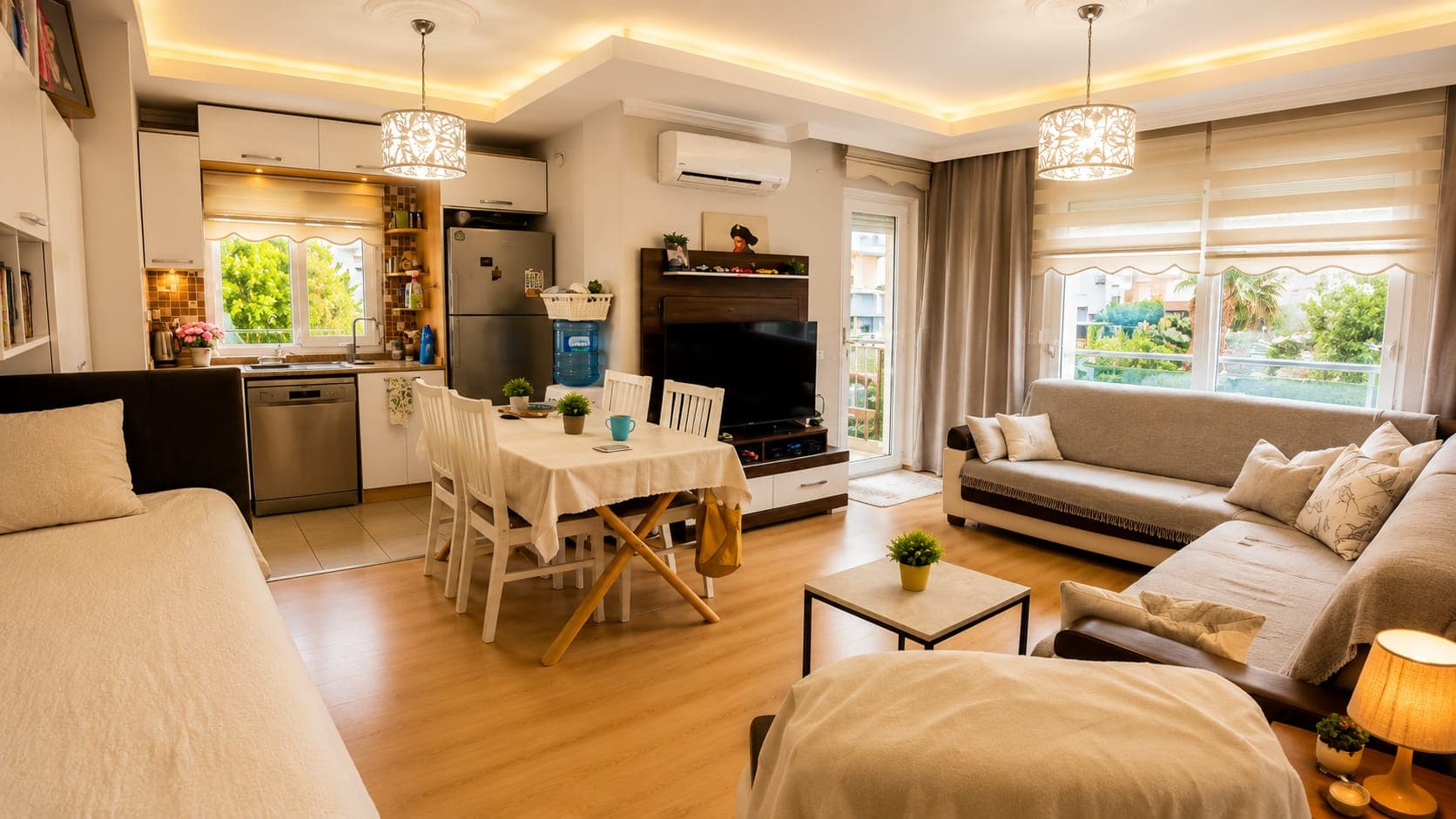
VG-1016Hurma · 1+1 · In a Complex with Pool · Fully Furnished Apartment
Konyaaltı · Hurma Mh
- Rooms
- 1+1
- Bathrooms
- 1
- m²
- 65